History
Early years
The earliest record of the Oxford University fencing Club (OUFC) was an event held by the club called “The Assault at Arms” on February 23rd, 1892, which was designed to attract people to the new sport. A programme printed for the event depicts the Club’s crest which indicates its foundation in 1891. Five years after “The Assault at Arms”, in 1897, the first varsity match was held against Cambridge University. This featured both boxing and fencing due to the Cambridge club being a combined club, and as such the Oxford University Fencing Club paired with the Oxford boxing club. For the first two years of the varsity match only foil was featured, with sabre being added in 1899. Fencing would be a relative side show of the varsity match, with only two foil bouts and one sabre bouts compared to a large number of boxing weights. This lead to a boxing-fencing varsity split in 1913, with the fencing varsity being held in Salle in London in 1913.
During these early years, OUFC featured many notable fencers who would go on to have impressive fencing careers. One particular example is Robert Montgomerie who was the British national foil champion in 1905, 1908, 1909, and 1910; and the national epee champion in 1905, 1907, 1909, 1912, and 1914. He was on the first English Epée team in 1903 and the Olympic epée teams of 1908 and 1912 in which he won silver medals and was also on the Olympic foil and epée teams in 1920 and 1924. He was also vice-president of the AFA, succeeding Theodore Cook in 1928 after a stint as secretary.
-
The Assault at Arms, given by the Oxford University Fencing Club at the Clarendon Rooms on Feb. 23, 1892, is the first record we have of the club. An elaborate programme was printed, designed to attract people to this new sport. From this Programme we can discover the date of the club’s foundation on the crest; 1891. Also, the first personnel of the club; the secretary, Theodore A. Cook, who was to go on to a distinguished career in British fencing, and the Maitre D’Armes M. de Goudourville, The event itself was truly spectacular. It was divided into three parts, each one introduced by a selection of appropriate music played by a large orchestra composed of university members. The first part consisted of a series of matches between some of the most prominent early exponents of fencing in England, including Egerton Castle and Captain Hutton, and members of the club. These were fenced with foil and “duelling sword” that is epée. After the musical interlude, the second part began with a “brief allocution by the President Sir Frederick Pollock, explaining the transition of swordsmanship from the old English Sword and Buckler fight to Rapier and Dagger”. This was appropriately demonstrated by an “Elizabethan prize at verie many weapons,” featuring the previous participants fighting with rapier and dagger versus the same, sword and buckler, and sword and cloak. In the third part, there were more bouts for foil, sabre, and duelling sword, plus one for duelling sword versus sabre, ad for “highland broadsword and target”
Admission to this grand event was 59, or 2s.6d. at the door. This demonstration seems to have been successful, because the OUFC was established and running. The first varsity match was held in 1897, with foil only for the first two years, a sabre match being instituted in 1899. At this time, the Cambridge club was a combined boxing and fencing club, and it was presumably to facilitate the organisation of the varsity match that the Oxford fencing club joined up with the boxing club. Fencing was clearly secondary in this arrangement, however. In the varsity match, there were only two foil bouts and one sabre bout, compared to a large number of different boxing weights. In the copies of the club rules that survive, regulations refer to rounds and weights, but not bouts or weapons. In the executive, there were never more than a couple of fencing names out of seven committee members. The real centre of fencing in Oxford at the time was the Oxford Fencing Club (OFC), made up largely of alumni of the university club, whose leading light was Robert W. Doyne. This was recognised in 1906 when the University fencing club moved its headquarters to the premises of the OFC, at 7 Gloucester St., though the varsity match continued to be held with the boxing club. Thus it seems clear that the OUFC and the OFC were not clearly distinguishable. The OFC also seems to have been responsible for the epée match. It is not known when it began, but the first record of it is in 1903. This was altogether separate from the foil and sabre. It was held in the summer, in The Queen’s College quad , and was fenced between teams of five fencers, each bout to only one hit, in true duelling style.
The fencers were mostly former Blues – fencers who had fenced for the university in previous years, or at least had been members of the OUFC, but had now graduated. Thus, it was called the “Veteran’s match”. The OFC also organised matches against other clubs; there is a card from a match against the London Epée Club in March 1903.
The OFC also put on a series of grand events. On January 13, 1902, in the words of C. de Beaumont, “A considerable sensation was caused by a ‘Fencing at Home’ given by Mr. and Mrs. R. W. Doyne, at the Oxford Town Hall”. The elaborately printed programme, eight pages long, included “A few words on Sword play and foil play” by Egerton Castle, with photographs.
It announced that “the display has been arranged mainly for the sake of encouraging fencing among women.” There was general fencing, prizes for winners and for style, demonstrations, and musical interludes. A special train was run from London to bring people. This was the first event of its kind ever held in England, and the afternoon proved a great success. There were over five hundred people present, and enthusiastic reports appeared widely in the press. It was so successful that a second one was held in Bournemouth the following year.
On December 8, 1906, the Oxford Fencing Club held another At Home, in the Big Game Museum on Woodstock Rd., from 3:30 to 6:30. The programme is appropriately illustrated with various sword carrying animals; Rhinoceros, belugas, swordfish, porcupine and a saw fish at the back, sad because he has been excluded for carrying an ungentlemanly weapon. This At Home included a match with duelling swords between the Sword Club of London and the OFC, which was followed by general fencing by ladies and gentlemen (the bouts to last eight minutes each).
The OFC, and especially Robert Doyne, were also active in the setting up of a national fencing organisation. It had stayed away while the fencing organisation was a branch of the Amateur Gymnastic association (from 1895). In 1901, however, there was a conference held to set up an independent Amateur Fencing Association, and Robert Doyne went as a delegate from Oxford, and became a member of the founding committee. He was the first of many Oxford fencers to serve on the AFA. In 1913, the divorce between the boxing and fencing clubs was made complete. The varsity fencing match was held separately and was moved to a fencing salle in London, though it was still held in early March. The number of fencers was increased, to three foilists and two sabreurs. It was to stay that way until 1947. A poster survives advertising the 1914 varsity match. It was held at Tassart’s Salle D’Armes, Oxford Circus, London. Tickets were 2/6, obtainable from the club secretaries.
This independent existence was cut short by the advent of the First World War. The university club went into suspension, with no captain, just an acting secretary. Two people alternated in this position through the war. As for the Oxford Fencing Club, it disappeared as most of its members went off to fight for their country, and never seems to have really recovered.
In these early years of the club, and of fencing, Oxford University contributed many notable personalities to English fencing. The aristocratic nature of the sport in its early years is reflected in the fact that not less than three counts fenced for Oxford between 1897 and 1914. We have already seen the contributions Robert Doyne made to fencing. Even more notable was Philip G. Doyne. He won the 1912 national foil championships that have been described as “the most remarkable on record.” The final was fenced as a poule, and four tied for first place. There were not less than three separate barrages over two days of competition before Philip Doyne emerged as the winner. He also won the foil championships in 1920; and represented Great Britain in the 1920 and 1924 Olympics amongst other international events. Moreover, he contributed a great deal nationally and internationally to the organisation of fencing as a sport, becoming AFA vice-president in 1938. Another notable early Oxford fencer was the club’s first secretary, Theodore Cook. He organised and acted as non-playing captain of the first English team to take part in an international tournament, in Paris in 1903, and helped organise the first international competition in England, at Crystal Palace in 1904. He was also non-playing captain of the 1906 Olympic team, which travelled to Athens on the Bronwen, the yacht of one of the team members, Lord Howard de Walden. He also played a role in the organisation of international fencing, and was a vice-president of the AFA in the 1920’s.
Most impressive as a fencer was Robert Montgomerie, one of the best fencers in pre-war England. He was national foil champion in 1905, 1908, 1909 and 1910, and came second several times. He was epée champion in 1905, 1907, 1909, 1912, and 1914. He was on the first English Epée team in 1903 and the Olympic epée teams of 1908 and 1912 in which he won silver medals and was also on the Olympic foil and epée teams in 1920 and 1924. He was also vice-president of the AFA, succeeding Theodore Cook in 1928 after a stint as secretary.
Between the Wars
Following the First World War, the Oxford University Fencing Club was slow to get restarted as although the first post-war varsity match was held in 1920, the club did not fully become active until 1921 - the year the first captain since 1914 was selected. During the interwar period there was expansion of competitions in which the club participated in. In 1930, the Oxford Fencing Club (a largely alumni club also found in Oxford) presented a shield to the university fencing clubs of Oxford and Cambridge to be held annually by the winners of the foil, sabre, and epee matches. However, as epee was not apart of the varsity match, the winner of this shield was not necessarily the winner of the varsity match. Notably up until this period, epee matches hosted by the alumni-run Oxford Fencing Club were held outdoors during the summer. The varsity matches remained at the London Fencing Club until at least 1930. In 1931, the Universities’ Athletic Union organised university championships in all three weapons, and a women’s university foil championship was organised in 1934.
One of the developments that took place in the interwar period was the establishment of the Assassins (originally M2, but now inclusive of W2 following the integration of women’s teams) by the Marquis de Amodio in 1932 during his tenure as captain.
During this period Oxford boasted the Crown Prince of Norway, later to become King Olaf V, as one of its fencers. He fenced sabre, won one match and lost one match - becoming a Half Blue. He later started an exchange between Oxford and Oslo, which lasted until the 1950’s; in which Oxford visited Oslo one year and received a return visit the next.
-
While Oxford did not produce any outstanding world-class fencers in this period, it participated fully in the expansion of fencing in the country and in the universities. The first post-war varsity match was held in 1920, but the Oxford club did not really get active again until 1921. In that year the first captain since 1914 was selected, and the club moved to new headquarters at No. 3 Magdalen St.. Its coaches were Leon Bertrand and F. Grave, both eminent coaches of the period (Felix Grave became the first president of the British Academy of Fencing Masters in 1931).
One of the first acts of the club was the establishment of a commemorative trophy. Robert Doyne, who had done such great services for fencing in Oxford had been killed during the war. In the Autumn of 1921, the Oxford Fencing Club presented to the AFA a silver challenge cup in his memory. It was for an annual foil competition that would be open only to non-finalists in foil championships and non -internationals. The first tournament was in 1922. This became the basis for similar tournaments in the other weapons, and it was recognised as the national junior championship Oxford took part in the establishment of other competitions as well. In 1924, a joint committee of Oxford and Cambridge Fencing Blues established the National Public School Championships in foil. Sabre and epée competitions were added later.
In 1930, the Oxford Fencing Club presented a shield to the university fencing clubs of Oxford and Cambridge to be held annually by the winners of the foil sabre and epée matches. The epée was still held outdoors in the summer (the electric epée was developed in the 1930’s and adopted by the FIE in 1933, but had not yet made its way to Oxford) and was not considered part of the varsity match. Cambridge did not award a Half Blue for the epée match until 1947; thus the winner of the shield was not necessarily the winner of the varsity match. In 1932 and 1933, Oxford held the shield, while Cambridge won the varsity match. This happened again in 1936, while in 1939 the situation was reversed, and Cambridge won the shield while losing the Blues match.
In 1931, the Universities’ Athletic Union organised university championships in all three weapons. A women’s university foil championship was organised in 1934. This was recognised by the AFA as the official university championship in 1938, and in 1939 C.L. de Beaumont presented a silver cup as a trophy for the inter-university team championship. The first championship, in 1939, was won by Oxford.
During all this expansion in competitions, the OUFC continued to function happily. The varsity matches were still held in London every March, at the premises of the London Fencing Club until at least 1930. The mid 1920’s saw the arrival of someone who was to play a prominent place in Oxford fencing for almost thirty years, Sammy Cromarty-Dickson. He was a French-trained fencing master who became the permanent coach for the OUFC, first in association with Felix Grave and then alone. In the middle of that decade the club moved its headquarters to 21 George St., across from what is now the Apollo theatre, which became his salle and the home to generations of Oxford fencers.
The romance had evidently not completely gone out of fencing, because in 1927 “Grad International Fencing display” was held at Carfax Assembly rooms, Oxford, on November 1. It was presented by members of the OUFC, and arranged by Professors Felix Grave and Sammy Cromarty-Dickson. Lady and gentleman fencers from France, Japan and England took part.
There was a display of ancient ‘sixteenth century fencing with rapier and dagger in costume. It opened at 7:30 in the evening, and tickets were 5/9 reserved, 3/9 unreserved. Had this been held a year earlier, they might have added a fencer from Norway. In 1926, the Crown Prince of Norway, later to become King Olaf V, fenced for Oxford and became a Half Blue. He fenced sabre, won one match and lost one match. He later started the exchange between Oxford and Oslo, which lasted until the 1950’s; in which Oxford visited Oslo one year and received a return visit the next. Another notable fencer of this period was Michael Macready, captain in 1936, who fenced for Great Britain in the London Olympic games of 1948.
Notable during this time period was the establishment of a team secondary to Blues, known as the Assassins, by Marquis de Amodio who was captain in 1932. Information regarding the Assassins during this period is scarce, with a previous compilation of this history (prior to 2006) stating that the origin of the Assassins is not known. The previous passage relating to the origin of the Assassins was as such : “It is again hard to tell when they were formed, but they probably began between the wars. This is indicated by a curious circumstance: M.R. Leigh, assassins captain in 1972-3, relates that his father was also assassins captain around the beginning of World War II. He recalls that the team standard was so good in his time that it was quite an honour to fence for the assassins.”
After WWII
Compared to the relatively slow restarting following WWI, the Oxford University Fencing Club was reactivated almost immediately following the end of WWII in October 1945 (VE : August, VJ : September). The first match was held against an American army team in the old Clarendon Hotel in the Cornmarket. The club at this time included a vast range of ages, with servicemen returning from the war mixing with students just out of school. The varsity match was held in the same format as the interwar period, with the epee match being held outdoors during the summer in St John’s gardens. In 1951, all the matches were held together in March, with the present varsity format being established in 1952.
The post war period proved to be time of great expansion for the British fencing scene, with Oxford experiencing a golden age of fencing. During this time, Oxford was captained in turn by two fencers who are undoubtedly the best fencers Great Britain has produced, Allan Jay and Bill Hoskyns, who helped Oxford achieve the longest consecutive winning streak ever in the Varsity match - eight wins in a row from 1951 to 1958. During the captaincy of Allan Jay, in 1954, the college cuppers competition was established, along with the novice varsity match versus Cambridge (Oxford/Cambridge freshman’ s match).
In 1966, the home of OUFC was moved to the newly constructed Iffley Road Sports Centre due to its inclusion of a dedicated Salle for the club, however it was too short to hold an electric fencing piste. This lasted until 1996, at which time the fencing club was moved to the Cricket Schools at Iffley Road Sports Centre where the club remains to this day.
-
With the advent of war in 1939, the club’s activities were again interrupted. The salle was requisitioned for war purposes, Sammy Cromarty-Dickson joined the RAF, and the club once again went into suspension.
The AFA was re-founded in 1945, and was soon back to its pre-war strength. The twenty years from the end of the war to the sixties was a period of great change. It saw a huge expansion in the number of fencers and of clubs in Britain, and also the establishment of a strong fencing infrastructure, with competitions, coaching schemes, and the construction of the permanent AFA headquarters. These years also saw British fencing reach a very prominent place in world fencing, and the achievement of outstanding international results. These years were glory years for Oxford fencing as well. Oxford was captained in turn by two fencers who are undoubtedly the best fencers Great Britain has produced, Allan Jay and Bill Hoskyns, and also contributed many other British internationals in this period. They helped Oxford to the longest consecutive winning streak ever in the Varsity match eight wins in a row from 1951 to 1958. The club also contributed many fencers who, while not internationals, did a great deal to contribute to fencing in Britain. This time also saw changes in the club and in the format of the varsity games. The club was reactivated in October of 1945 and the first match was held against an American army team, in the old Clarendon Hotel in the Cornmarket, because the salle had not yet been derequisitioned. Blues of the time recall the extraordinary mix of ages that was present in the club at the time, with servicemen returning from the war mixing with people just out of school. The salle on George St. was derequisitioned in January 1946, and was soon back to normal. Christopher Kirk-Greene recalls it as “a splendid salle equipped with all one could want, and in the centre of Oxford. I remember the walls lined with racks for weapons and with photographs of Oxford teams.” Sammy Cromarty-Dickson was still the coach, but it is possible that his heart was not in it quite as much any more. He had been an officer in the RAF during the war, and to go back to teaching fencing to undergraduates must have seemed a bit of a letdown. A few years after the end of the war, the lease on the George St. Sall ran out, and the club began a series of peregrinations in search of a permanent salle. Sammy himself retired at the end of the 1950’s.
The varsity match was still fenced according to the same format, with the epée match out-of-doors in the summer. When in Oxford, it was held in St. John’s gardens. In 1947, the sabre teams were increased to three-a-side, and Cambridge finally awarded a Half Blue for the epée. In 1951, all the matches were held together in March, with four-a-side teams, and in 1952 the present format was finally established, with three-a-side teams fencing on the same day. Derek Parham recalls that in his presidency (1947-8), the voting members of the club were those chosen by the present voting members on the basis of competition results – a sort of “self-perpetuating oligarchy”. But pressure from the rest of the club meant that this was changed so that all members of the club could vote.
At this time, the exchange with Oslo was still going. In 1949, Oxford sent a team to Norway. They arrived late at night after a rough crossing, and the match was held the next day, which put them at a certain disadvantage. However, the day could not be changed as it was the only one on which the Crown Prince could attend, and Oxford lost narrowly. This was followed by a week of skiing and individual matches. The Norwegians came to Oxford in the following year, and Oxford again went to Norway in 1952, as Allan Jay recalls. Sadly, however, this exchange seems to have petered out later in the decade. In the early 1950’s, the two most famous fencers to go through the OUFC captained the Oxford team. In 1953, it was Bill Hoskyns. His list of achievements goes on and on: World epée champion, 1958; Silver medal in epée at the Tokyo Olympics, 1964; and silver in the world championships, 1965; one of only two Englishmen to win the Martini Epée (1962); British epée champion 1956-58 and 1967, and second many times; British foil champion in 1959, 1964 and 1970, and second twice; many commonwealth medals, and wins in various other notable tournaments too extensive to mention. Ironically, in the year of his captaincy, he was unable to fence, as he had broken his leg skiing with Allan Jay during the winter vacation!
The other famous fencer was Allan Jay, captain in 1954. His list of achievements is equally long: in 1959, he became world foil champion, and came in second in epée, the last person to get two medals in the same year. He won the silver medal in epée in the 1960 Rome Olympics; was British foil champion in 1963 and second many times; British epée champion in 1952, the year he started at Oxford, and again in 1959 and 1960, and second several times. He too won commonwealth medals and tournaments too numerous to mention. While he was at Oxford, he was also junior sabre champion in 1953. During his captaincy, he instituted several things which are still part of the club. He began College cuppers, and the Oxford/Cambridge freshman’ s match, both of which are still going strong. He changed the rules so that a non-Blue could become captain, and he moved the beginning of the captaincy to Trinity term, for greater continuity, which is still the case. The salle at this time was on Leckford road. One interesting bit of trvia is that Nigel Lawson, future Chancellor of the Exchequer, was an Assassin at this time.
Other notable fencers who contributed to this period of Oxford strength were B.W. Howes, who in 1957 won both the foil and epée university championships, and was on the British Sabre team at the World Championships; and A.M “Sandy” Leckie. Sandy Leckie has been described as “the last of the three-weapon men”. In 1959, he achieved the remarkable feat of winning the Universities foil, epée and sabre championships in the same year, the only person to have ever done so. He was British foil champion in 1961, 1965 and 1967, and Sabre champion in 1963, 1965 and 1967. He won several commonwealth medals, and was a member of many British international teams in all three weapons, beginning while he was still at Oxford .
In 1959, the streak of Oxford wins sadly ended. However, this was due more to Cambridge’s strength than Oxford’s weakness, for Oxford continued to have very strong teams. At this time Oxford acquired a new coach, Bela Imregi. He had fled Hungary in 1956, with the Russian invasion, and settled in England. He was to coach Oxford throughout the 1960’s, and later became the national sabre coach.
Another notable event at this time was the foundation of BUSF in 1962. In 1952, the de Beaumont cup had been turned into a team event for universities affiliated with the Universities’ Athletic Union, thus excluding Oxford, Cambridge and London, who had dominated the competition previously. Fencers from these universities still competed in the individual competitions however. With the foundation of BUSF, these three universities began competing for the overall title again, though they no longer dominated to the same extent as they had before 1952. Oxford did not win the title until 1980.
Prominent among the new intake in the early 1960’s were Steve Higginson and Nick Halsted. Steve Higginson was Captain in 1963, in which year he won the Miller-Hallet, a remarkable achievement while still in university. He went on to a prominent career as a British international and team captain, and also contributed to the work of the AFA, among other things translating the new FIE rules in 1974 and 1981. He continues this work today and in 2000 was elected Chairman of the FIE Rules Commission. Nick Halsted, captain in 1964, had come second in the Granville Cup the previous year, and was both universities’ foil and epée champion. He became a British international in the world championships and the Olympics, and was later non-playing captain of the British international team. He was President of the AFA between 1986 and 1994. The remarkable strength of the Oxford team at this time, particularly in epée, was demonstrated when the OUFC came second in the Savage shield competition, the national competition for epée teams, two years in a row, in 1962 and 1963. It is the only university team to have done this well. Fencing at this time took place in St. Michael’s Hall, on St. Michael’s street just off the Cornmarket. Term cards survive from 1963 to 1967, and they show a very active club. There were matches just about every week in the autumn and the winter, either for the Blues or for the Assassins, who fenced separate matches, depending on the quality of the opposition. The opposition included public schools, other universities and clubs.
Blues of this period notable beyond strictly fencing are Charles Rentoul and Rocco Forte. Charles Rentoul in addition to winning the university foil and doing some international fencing, became editor of `The Sword` from 1965. Rocco Forte, secretary in 1965, of course went on to be the head of Trusthouse Forte, among whose many possessions included the Randolph Hotel in Oxford.
In 1966 the fencing club’s decade and a half of peregrinations finally came to an end, as the university included a fencing salle in the newly built Iffley Road sports building. It is too bad they made it just slightly too short to hold an electric piste! This salle remained the club’s home until 1996. The varsity matches seem to have been fenced here in alternate years, until 1971, after which the Blues and Assassins matches were held at Crystal Palace as part of a day of Varsity matches in “minor” sports for a decade, before reverting back to Oxford and Cambridge in the 1980’s.
In the sixties and seventies, the assassins were well established and had very regular matches, just about every week in term. They tended to fence teams from the leading public schools, who would combine the fencing outing with a visit to prospective Oxford colleges. They also fenced teams whose standard was not considered up to that of the Blues, such as the Oxford Polytechnic and the county teams. The time of the Assassins vs. Cambridge Cutthroats' contest has varied over the years, sometimes being at the same time, sometimes at a different time than the Blues. In 1989-90, the assassins match was moved back to the same day as the Blues, which makes for an exciting atmosphere.
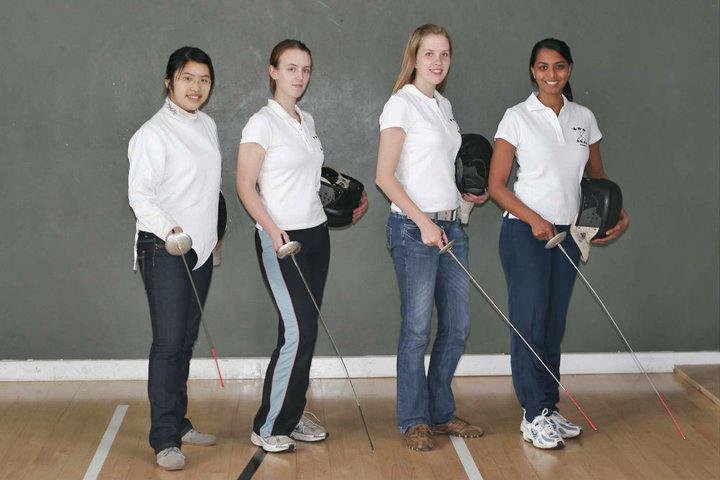
Readers may have noticed two significant gaps in the history so far. The first is the women’s fencing team. Unfortunately, there are no archives with regards to the women’s team, and it is hard to say when women started to fence at Oxford, and when they formed the first organised team. The first record I have been able to find is that they won the universities championship in 1956. The first varsity match was in 1957, which suggests that a women’s team only really got organised after 1945. Right up to 1980, the women had a separate club organisation, though a Blue from the seventies remembers that they fenced with the men. During this period, G. Ritchie won the Universities’ Ladies’ foil in 1973, in the same year as she won the Scottish championship. In 1980, the clubs merged.
A very interesting event in the early seventies was the Tour de France of 1971. This was organised by Bill Forward, who had spent a year teaching in Rennes, and the captain, James Mendelssohn. The expedition left Oxford shortly before Christmas 1971, travelling by mini-bus. The first main match was in Rennes, where the event was considered of sufficient interest to justify local television coverage. The hospitality, food and wine is remembered as copious and superb. From there they went on to Angers, to fence the local army team. Upon arrival, M.R. Leigh remembers, they were given “a slap-up meal, with some wine. After the meal had finished, we went down to the gymnasium where we found that we had been dining with the host club’s second team and that the first team was ready and waiting for us without having been weighed down by the meal!” From there, they went on to Paris, where they fenced a university team and one of the clubs.
The first full Blue awarded to a fencer was in 1968/69, to H. Tizard. However, the process and qualifications required for a full Blue change with every Blues committee, so that the awarding of full Blues has been rather erratic. One alumni remembers that the process of applying for one on behalf of B.J. Lewis, in 1973, was such a hassle that those involved swore off ever trying to do it again. Fortunately, the process became slightly easier, and several further full Blues have been awarded over the years to fencers of outstanding ability. The club now has discretionary status, which means that the captain can nominate particularly distinguished Half Blues for Full Blues. A system was set up by Simon Aspinall and Nigel Nutt, roughly based on the national rankings, to determine who can be nominated. The current (2024) system dictates that for a fencer to achieve a Full Blue they need to participate in the Blues team varsity match, and have a national ranking within the top 20%.
In over one hundred years of existence, the Oxford University Fencing Club has played a central role in British fencing. It has seen Britain’s best fencers go through its ranks and captain its teams. It has also seen many of the people who went on to organise British fencing through the AFA. Equally important, the club has contributed many of those good fencers who are perhaps not as prominent, but form the backbone of competitive fencing, and do so much of the necessary organisation, both locally and nationally. It is to be hoped that the club will continue for another hundred years with a distinguished career.
The Amodio Fund
Following the passing of the Marquis de Amodio in 2003, a grand patron of the club and founder of the Assassins team, a fund was set up in his memory to assist in financing coaching, kit acquisition, and competitions. In addition to this, a cup is awarded yearly in his honour, called the Amodio cup, for the Assassins fencer who has contributed the most to the club in that academic year. The cup now features in graduation celebrations by fencers who drink out of it upon the completion of exams.
-
In 2004, OUFC was proud to announce the establishment of a fund in memory of its grand patron the Marquis de Amodio (1909-2003). The Marquis became captain of the OUFC in 1932 and also established a second team to the Blues that became to be known as the Assassins’ which now form an integral part of the Varsity games. In his long life the Marquis regularly attended the yearly meetings of the Old Blues. Every year we honour his memory, as well as that of all our past members, by awarding, at the end of the Old Blues Match, The Amodio Cup. This trophy is awarded to the Assassin who contributed most to the club in that academic year. During the same occasion we also award the Cuppers Print donated by Allan Jay, M.B.E. and Captain in 1953 to that college that won the Cuppers competition.
In order to perpetuate the spirit and munificence of the Marquis de Amodio we have created a fund in his memory. The aim of the fund is to enable the club to subsidise as much as possible all coaching, acquisition of new equipment, as well as competitions and entries thereof that will enable all fencers to improve their own technique and abilities as well as promote the honour of our fencing club which has been high since 1891.
With the help, support, and generosity of the Marquis’ widow, née Murray, we have been able to establish this fund, and through her recommendations to perpetuate the wishes of the Marquis as regards the promotion of sport and of all students wishing to partake in this most noble sport.
The late Marquis de Amodio was one of the greatest fencers of his generation. He was also a sportsman with a keen interest in horses and became honorary president of the “Societe des Courses Hippiques du Mansle” in the French Charente. A bold man, after his Oxford studies, the Marquis led an expedition to Lapland in the winter of 1937. The beginning of WWII meant active service for a young man who then distinguished himself in combat. In June 1944 he was among those who landed in Normandy, on 25th August he contributed to the liberation of Paris, and in September to that of Brussels. He was awarded a “Mentioned in Despatches”. In 1946 he became squadron leader and assistant to H.M. 's Air Attache to the British Embassy in Paris. During his stay in France he married Anne de la Rochefoucauld (d. 1980). In her memory the Marquis then established The Anne de Amodio Prize of the International Burgen Institut, which was awarded to young historic house owners who had restored their historic home. Cultural heritage was among the main concerns of the Marquis during his whole life. In 1958, he was among the founding members of the association “Vieilles Maison Francaises”; in 1963 he was one the three founding members of “Europa Nostra”, an international federation of associations for the protection of Europe’s cultural and natural heritage. From 1971 to 1984 he was senior vice-president of Europa Nostra, and after that he was elected honorary life vice-president. Also from 1977 to 1982 he was President of the I.B.I., the world organisation for the protection of castles and historic houses.
Not only did the Marquis study at Lincoln College he also became an Honorary Fellow thereof. There he funded the Berrow Foundation’s postgraduate Scholarships which were set up to create further links between Switzerland and Great Britain, their aim is to provide not only learning, sports, unequalled opportunities for lifelong friendships and valued contacts, but also broaden its members’ outlook. Here again one can recognise the Marquis’ will to promote knowledge and the cultural and intellectual exchange among young people, while at the same time trying to preserve that past that helps us understand our history. The Marquis was among those luminaries who recognised that sport and sporting events were the best way to promote friendship among people and nations. International sporting events also enable countries and people from various cultural backgrounds to get to know each other and to build friendship and peace for the prosperity of all humankind. As a man who fought during one of the most terrible wars of the twentieth century, the Marquis had seen enough death around him to understand that wasting the youth of a nation was going to buy us freedom only for a short time. After the war all his efforts were aimed at building understanding among people, promoting sport and securing a bright future for an even brighter generation. The Marquis was a man with a keen interest in the future of research and mankind. He was a Fellow of the Royal Geographical Society, a Fellow of the British Interplanetary Society and Honorary Fellow of the Ancient Monuments Society. He also won the Gold medal of the “Societe d’Encouragement au Progrès”. The Marquis also contributed greatly to politics, security, and the building of post-war Europe as founder-chairman, in 1952, of the Royal Air Forces Association’s European Area Council (E.A.C.); in 1967, he became President of the E.A.C. and, in 1991, he was elected Life President of the E.A.C. In 1962, he was elected life Vice-President of the Royal Air Forces Association His services were recognised and rewarded with prestigious honours: in 1945 he became an officer of the French Legion of Honour (military), in 1962 followed an O.B.E and then a C.B.E. in 1996. The Marquis was also Knight Commander of the Order of the Holy Sepulchre, and Gold Grand Cross of Merit of the Order; and Commander of the Yugoslavian Royal Order of the White Eagle, with Swords. We honour the late Marquis’ memory and immense contributions to the OUFC and fencing as a whole, and hope that his example and career may inspire others to achieve as much and more.
Many thanks to Michael Burtscher (OUFC Treasurer 2003-2004) for researching and compiling the history of the club. The last known update to this manuscript was in 2006, following the establishment of the Amodio Fund, which gave greater insight into the founding of the Assassins team. The latest update introduced the summaries for each period, minor editorial changes, and greater incorporation of Assassins history throughout (Peter Springall : OUFC secretary 2024-2025, Assassins Captain 2024-2025).
The archives of the OUFC are held in two boxes in the Bodleian, G.Adds OXON b. 174 (O.U. Boxing and Fencing club), and the Fencing box in the John Johnson collection. Background information was provided by secondary sources, notably the three volumes of C-L de Beaumont’s Modern British Fencing: a history of the Amateur Fencing Association of Great Britain, and the fourth volume written by Edmund Gray. Also E.M. Morton’s The Martini A-Z of Fencing.
Help us tell your story
We are always interested in learning more about the history of OUFC, so if you are an alumni with cherished memories or photos you wish to share, or believe that the above documented history is wrong or missing something, then please either use the text field or file upload to help us out.
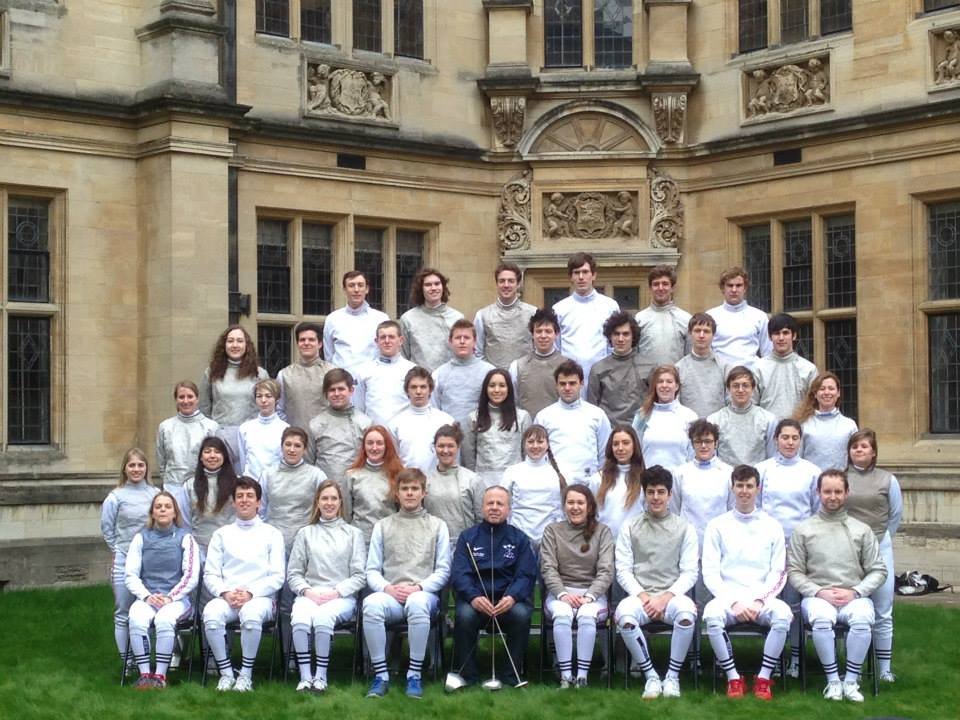
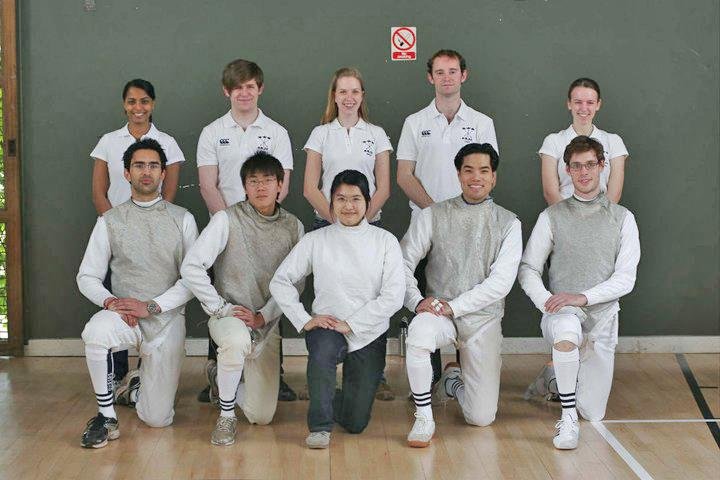
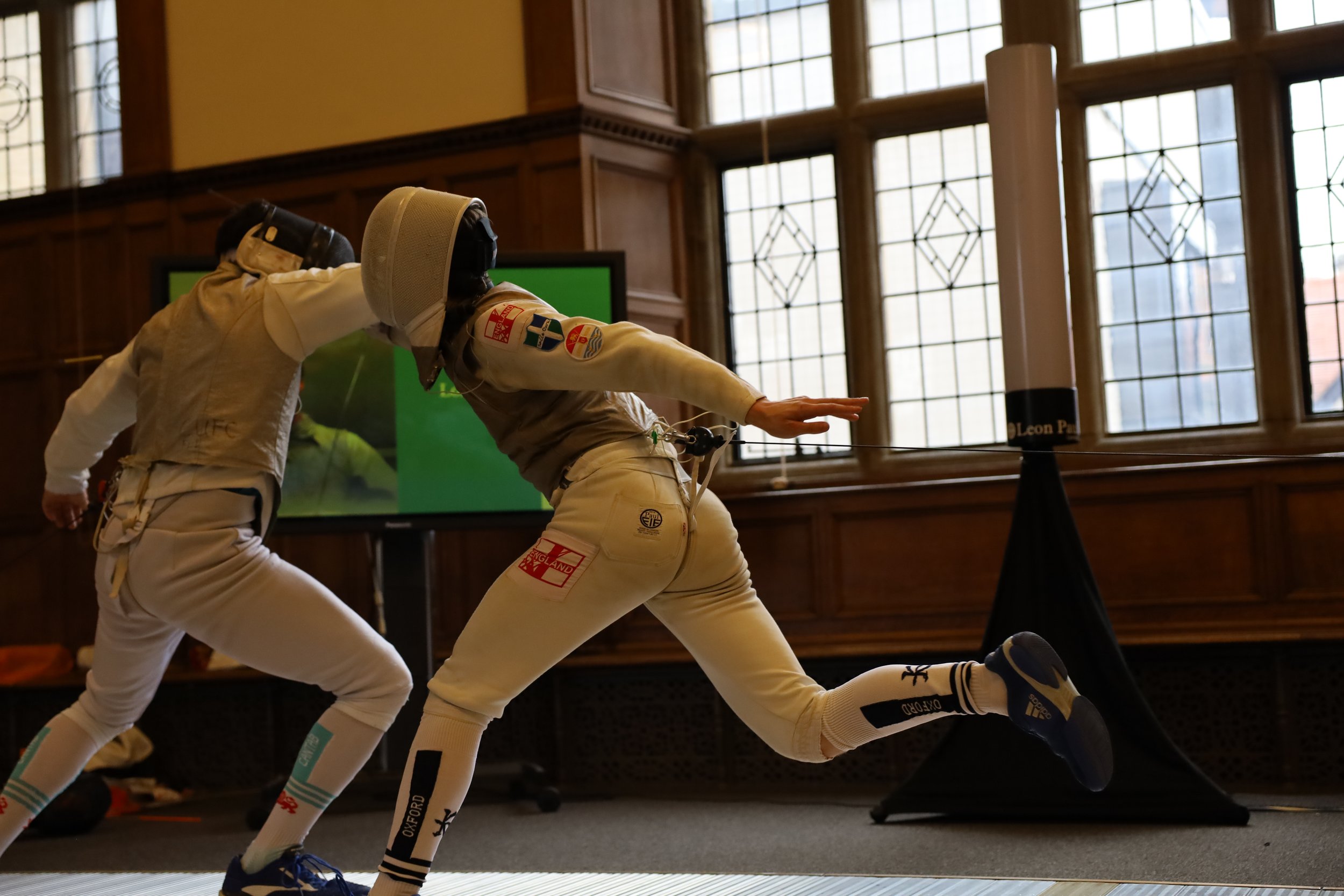
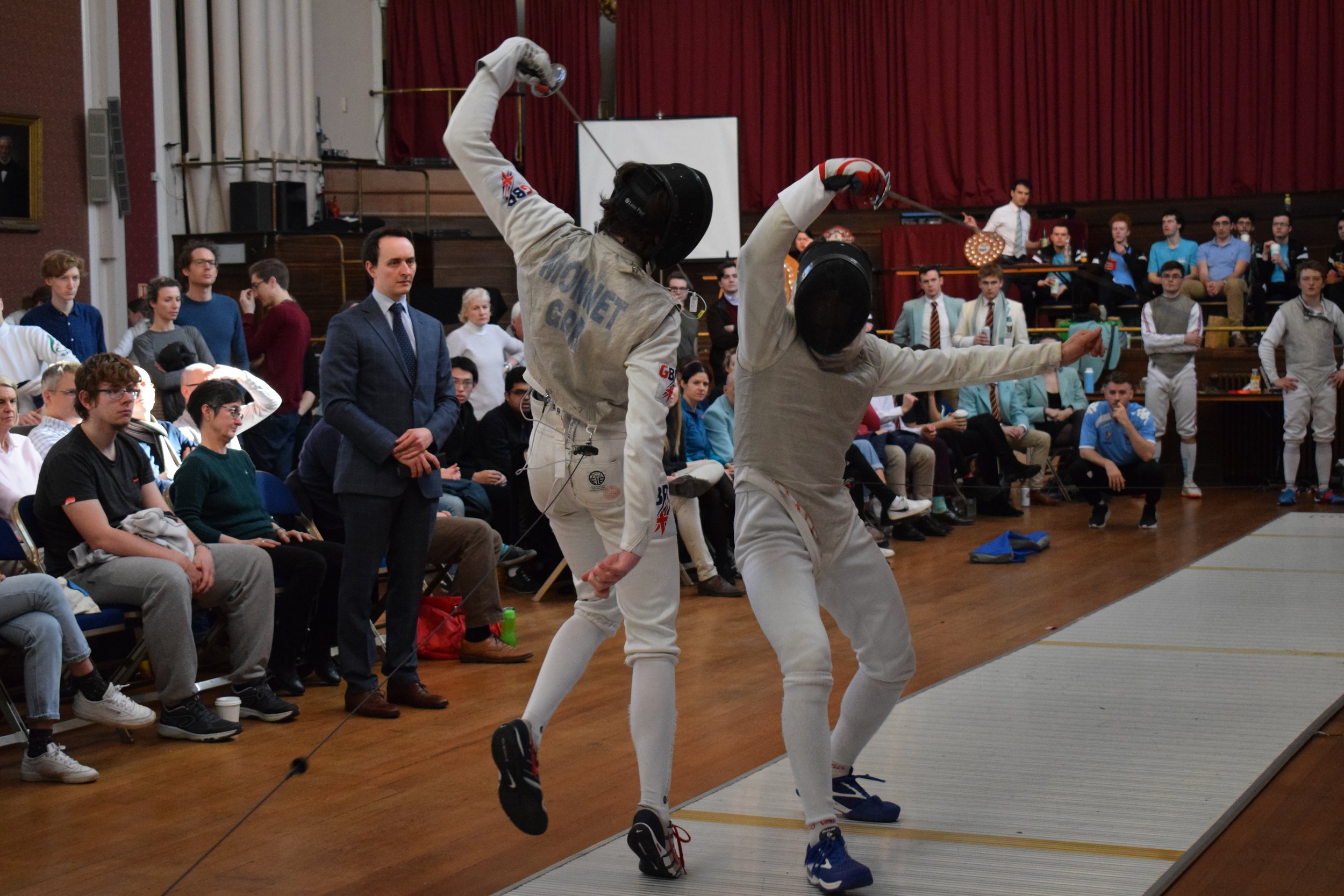
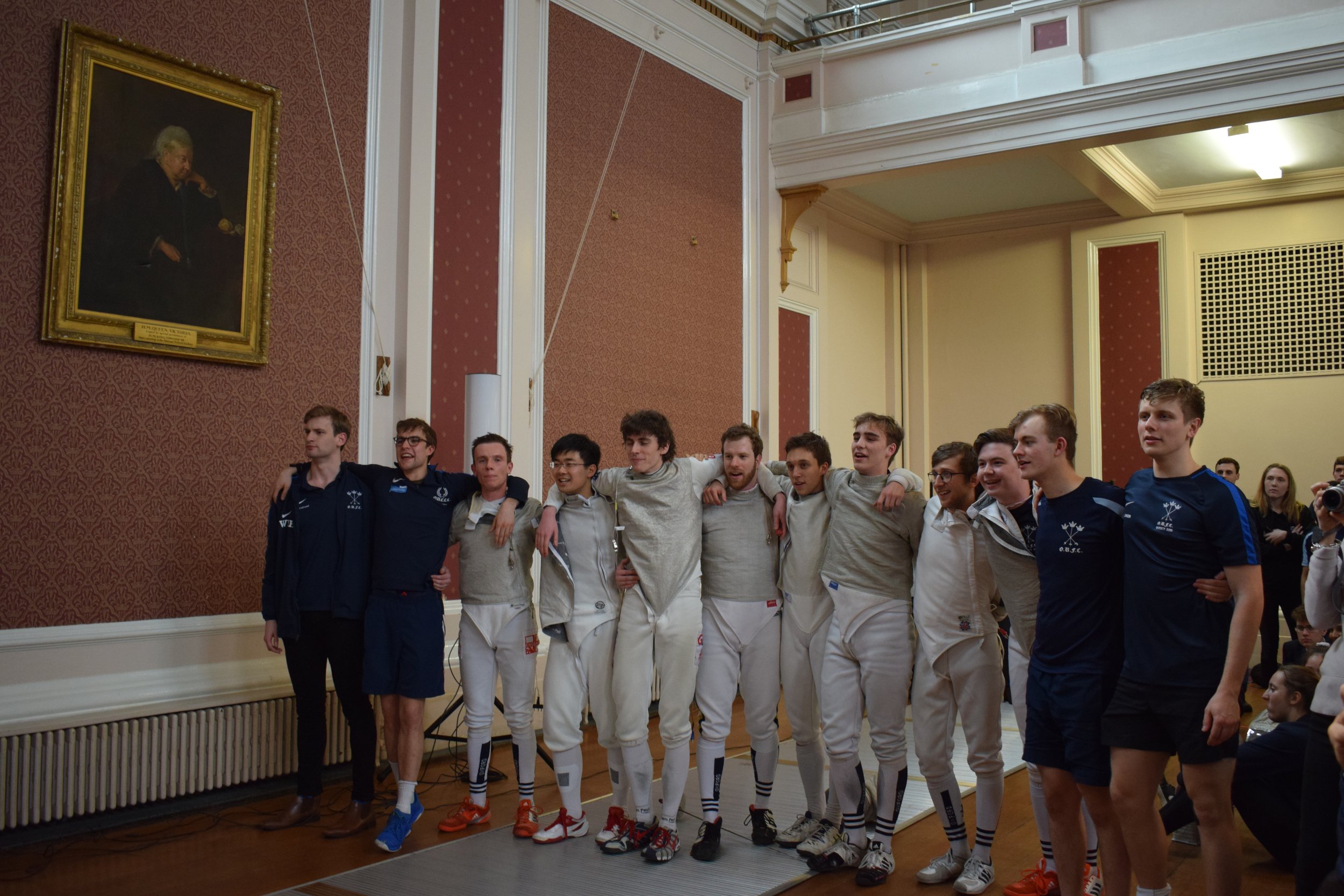
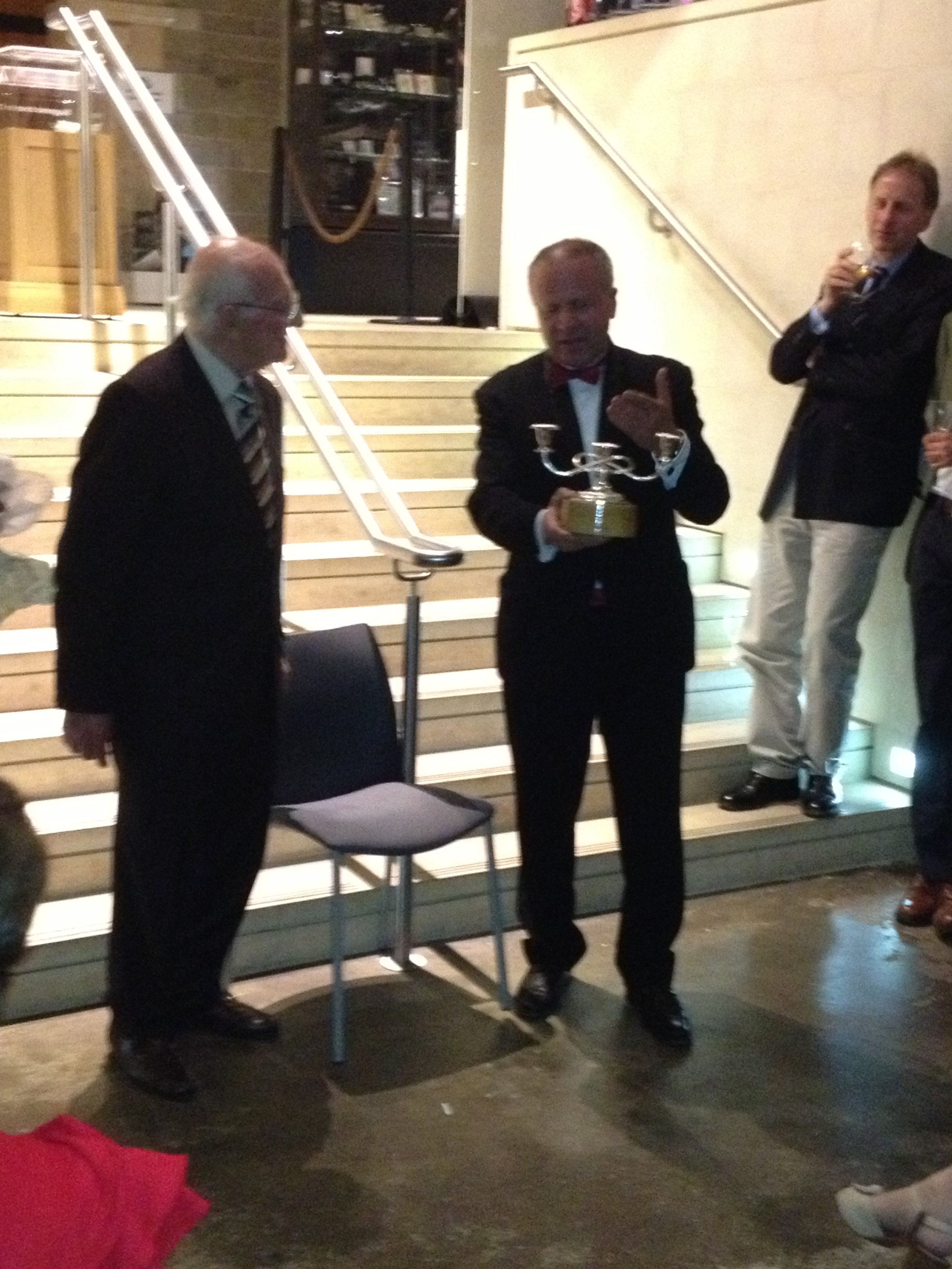
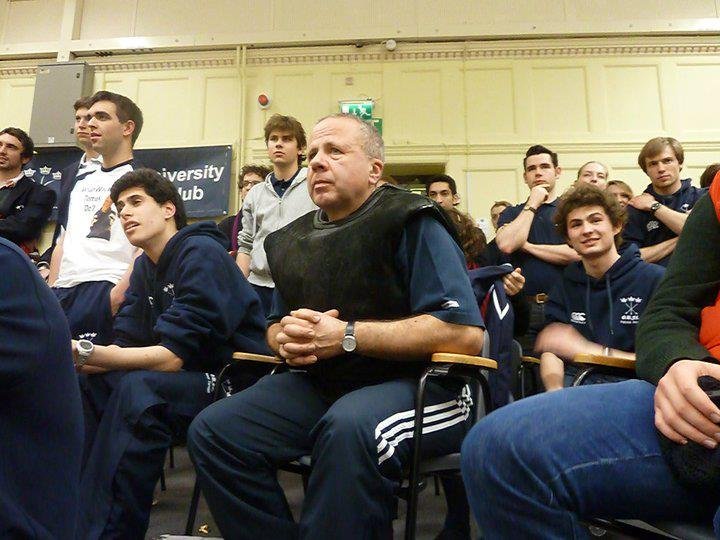
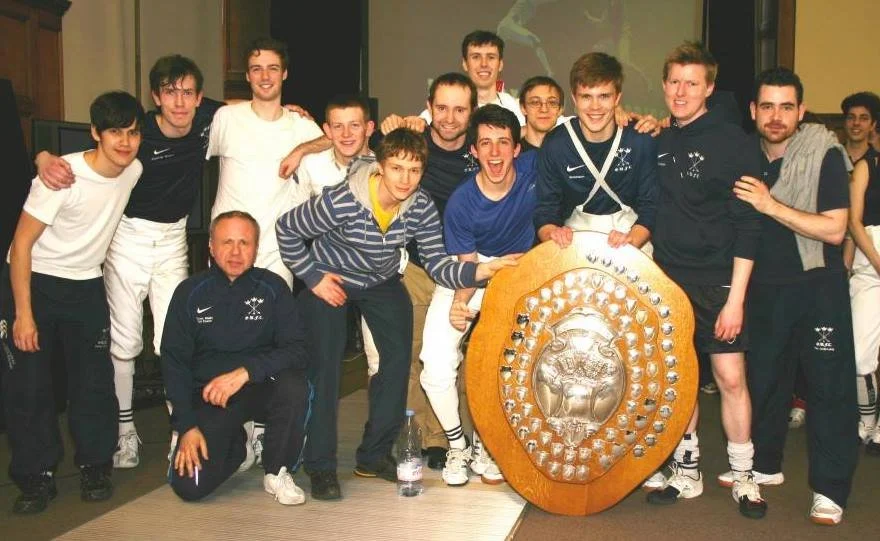
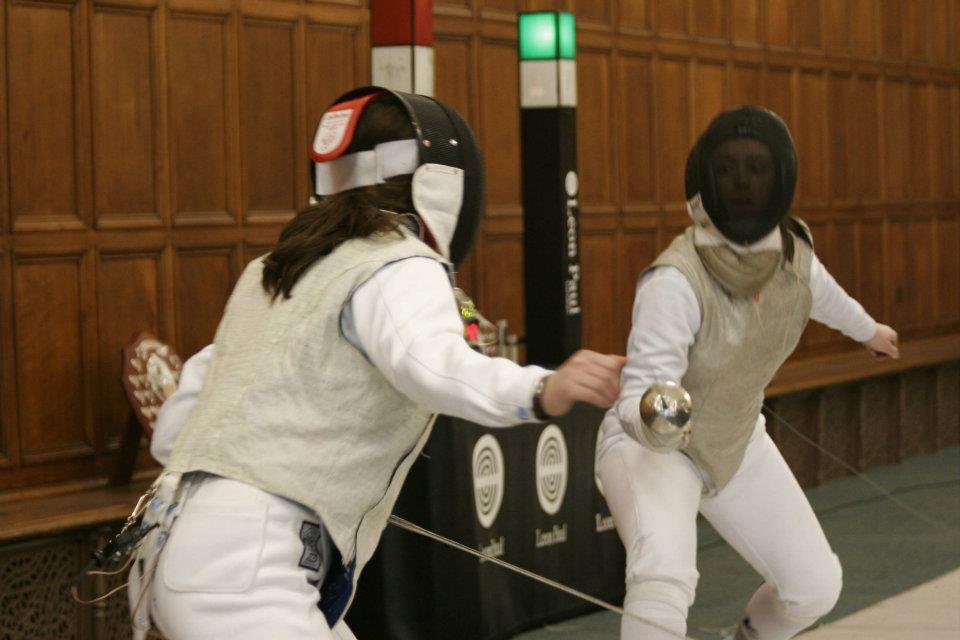
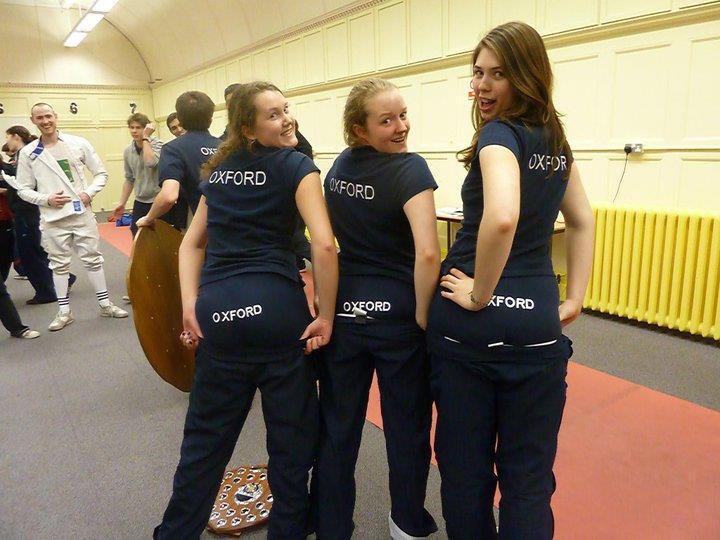
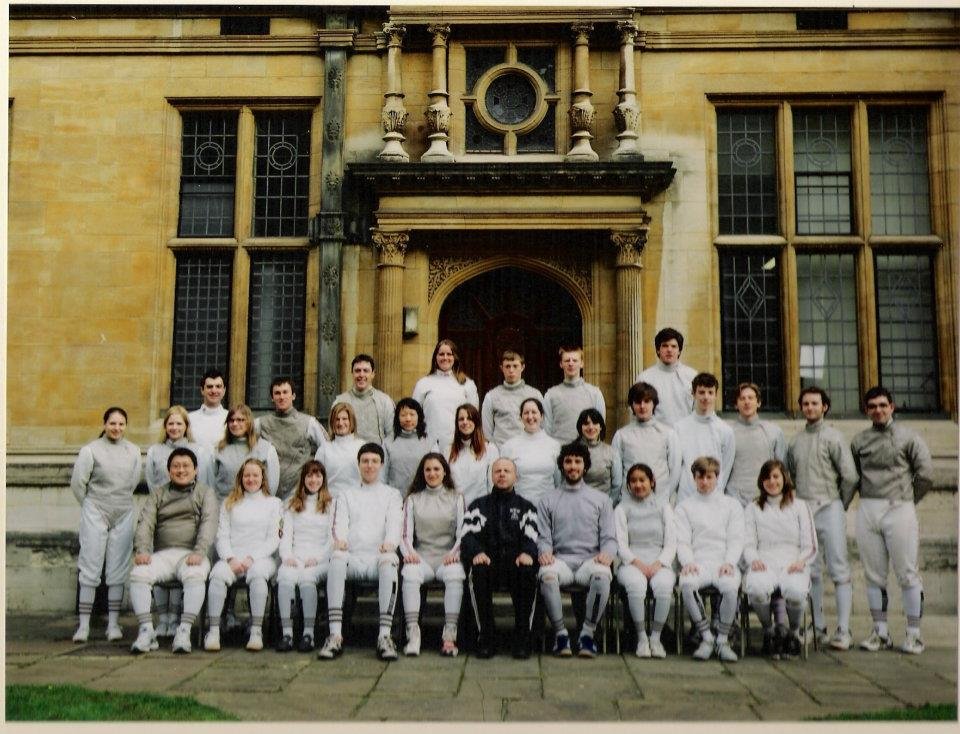
We want to produce a gallery on this page, so please submit any photos you have so we can share them. Please also help identify the date and people in the photos below.